How Pharmacology and Microbiology Connect in Modern Biological Research
An accessible scientific overview of how pharmacology and microbiology intersect through molecular interactions, microbial responses, diagnostics, and biological analysis.
How Pharmacology and Microbiology Connect in Modern Biological Research
Pharmacology and microbiology are traditionally studied as separate biological disciplines. Modern research increasingly shows that they are deeply connected, particularly when microorganisms, drugs, molecular interactions, diagnostics, and biological data are studied together.
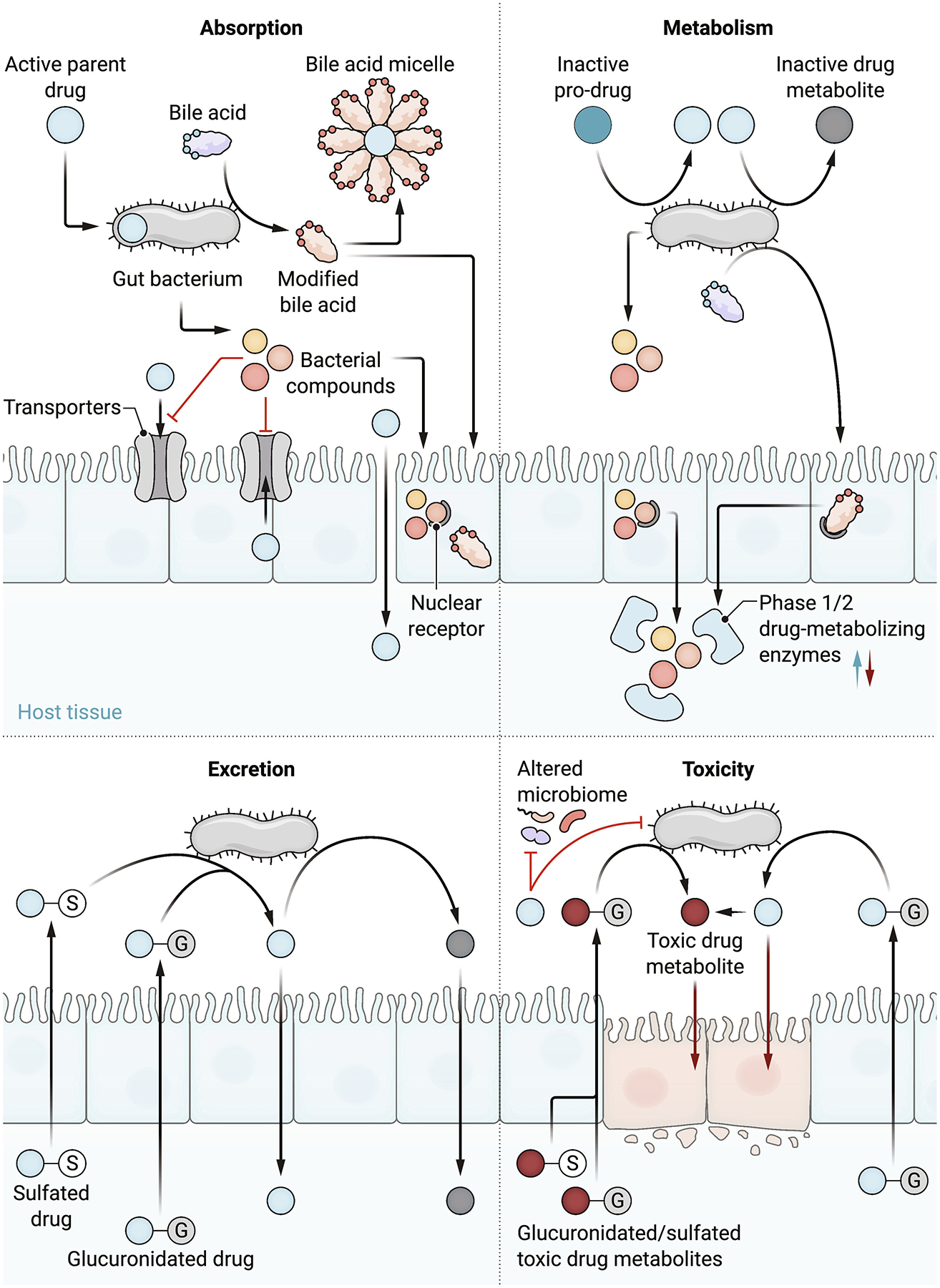
Biological systems rarely operate through isolated pathways. A drug can influence a microorganism, a microorganism can transform a compound, and both processes can modify the biological environment surrounding cells and tissues.
Understanding these relationships requires concepts from both pharmacology and microbiology. It also requires analytical methods capable of measuring molecular changes, microbial responses, and biological outcomes.
The Connection Between Two Biological Fields
Pharmacology investigates how chemical substances interact with biological systems. Microbiology focuses on microorganisms such as bacteria, fungi, viruses, and other microbial agents.
Although their primary questions differ, both disciplines examine biological responses to molecular signals and environmental changes. This creates an important point of connection.
Drug, compound, microorganism, cell or biological sample.
Compounds interact with enzymes, receptors or microbial pathways.
Cells and microorganisms change their molecular behaviour.
Measurements are converted into biological interpretation.
What Pharmacology Studies
Pharmacology is the study of how biologically active substances interact with living systems. Researchers investigate both the effects produced by a compound and the mechanisms responsible for those effects.
Pharmacodynamics
Pharmacodynamics examines what a drug does to a biological system. Researchers may study receptor activation, enzyme inhibition, cellular signalling, toxicity, or changes in physiological functions.
Pharmacokinetics
Pharmacokinetics examines what the biological system does to a drug. Absorption, distribution, metabolism, and elimination determine how much of a compound reaches a particular biological environment.
| Concept | Main Question | Example Measurement |
|---|---|---|
| Pharmacodynamics | What does the compound do? | Receptor response |
| Pharmacokinetics | What happens to the compound? | Drug concentration |
| Drug metabolism | How is the compound transformed? | Metabolite formation |
What Microbiology Reveals
Microbiology investigates the biology of microorganisms and their interactions with their environment. Modern microbiology goes beyond simply identifying microbial species.
Researchers can now investigate microbial genomes, metabolic pathways, protein expression, resistance mechanisms, community composition, and interactions between microorganisms and host organisms.
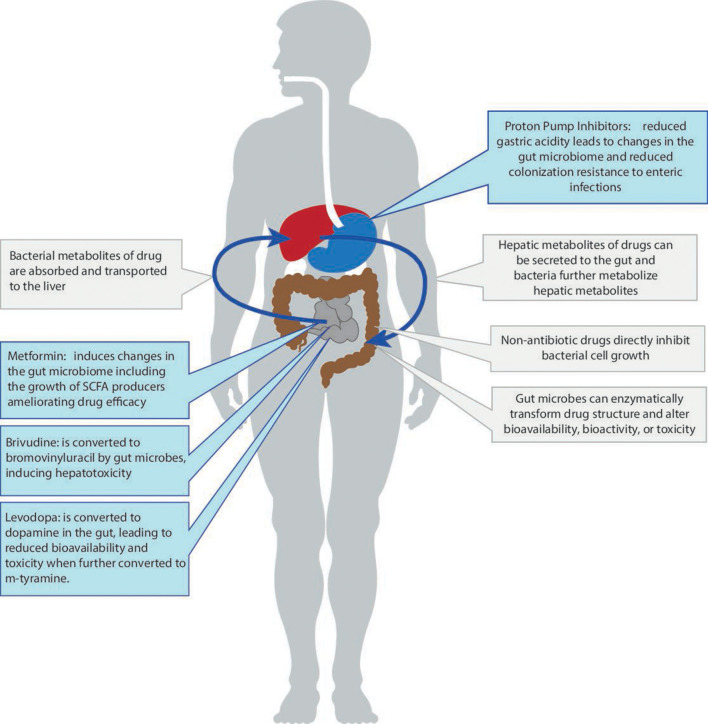
Source: Interaction between drugs and the gut microbiome
This broader view is particularly important because microorganisms can influence biological compounds, while compounds introduced into a biological system can alter microbial communities.
Where Pharmacology Meets Microbiology
The connection becomes especially clear when researchers study the interaction between microorganisms and chemical compounds.
Antibiotics provide the most familiar example. Their biological activity depends on their ability to affect specific microbial processes. However, the relationship extends far beyond antibiotics.
Microorganisms can chemically modify drugs, influence their availability, generate metabolites, or change the environment in which compounds act.
Key concept: A biological compound does not necessarily remain chemically unchanged after entering a microbial environment. Microbial enzymes can transform molecules and potentially modify their biological activity.
How Microorganisms Respond to Compounds
Microorganisms contain enzymes and metabolic pathways capable of transforming a wide range of molecules. Some of these reactions can influence how drugs behave inside a biological system.
Researchers therefore study not only whether a compound reaches a microorganism, but also what happens to the compound after contact with microbial enzymes.
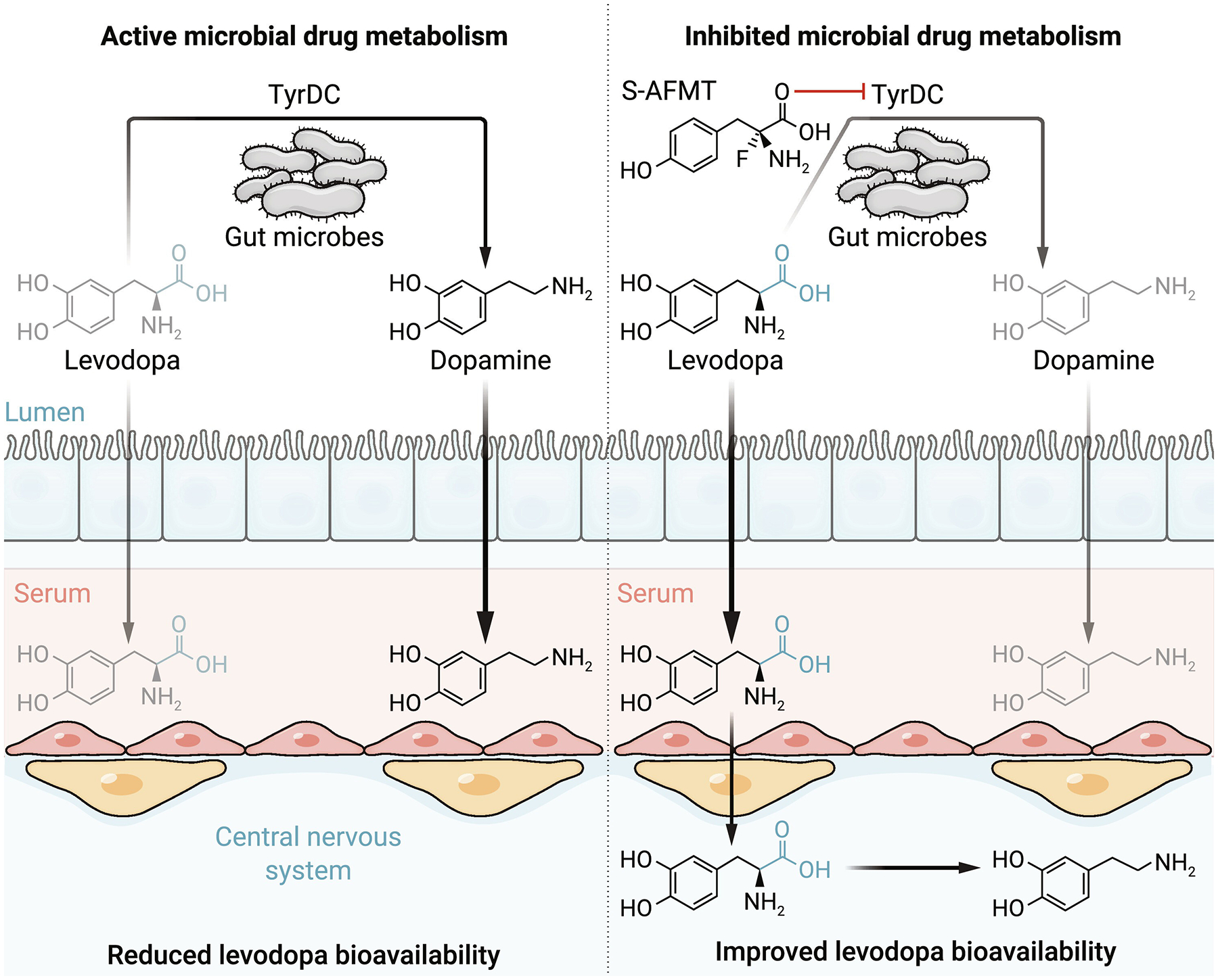
Source: Integrating the gut microbiome and pharmacology
Why enzyme activity matters
If a microbial enzyme converts a drug into another molecule, the resulting metabolite may have different chemical properties and biological activity from the original compound.
This creates a molecular bridge between microbiology and pharmacology: microbial metabolism can become part of the overall pharmacological behaviour of a compound.
The Role of Diagnostics and Detection
Understanding biological interactions requires reliable methods for detecting and measuring what happens in an experimental system.
Depending on the research question, scientists may measure microbial growth, nucleic acids, proteins, metabolites, enzyme activity, molecular biomarkers, or drug concentrations.
| Research Question | Possible Technology | Biological Information |
|---|---|---|
| Which microorganism is present? | PCR / sequencing | Microbial identity |
| Is a specific gene active? | RT-qPCR / transcriptomics | Gene expression |
| Which proteins are changing? | Proteomics | Protein abundance |
| Which compounds are produced? | Metabolomics | Metabolic profile |
The important point is that detection is only the beginning. The resulting measurements must be interpreted within the biological context of the experiment.
From Experimental Data to Biological Interpretation
Modern biological research can generate enormous quantities of data. Genomic, transcriptomic, proteomic, metabolomic, microbiological, and pharmacological measurements can be combined to describe a biological system from multiple perspectives.
Multi-omics approaches are particularly valuable because individual datasets often provide only one layer of biological information.
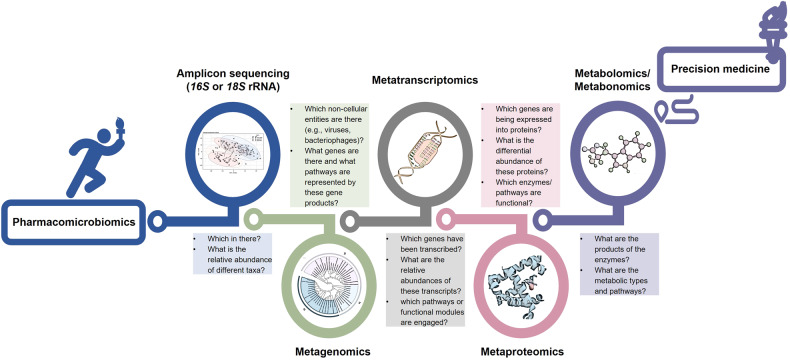
Source: Drug-microbiota interactions: an emerging priority for precision medicine
Integration allows researchers to move from isolated observations toward a more complete biological interpretation.
Generate molecular and biological measurements.
Identify differences between experimental conditions.
Combine complementary biological datasets.
Connect molecular observations with biological mechanisms.
Why Integrated Research Matters
Biological systems are interconnected. Studying only one component can therefore miss important mechanisms operating elsewhere in the system.
A drug may influence microbial populations. Microbial metabolism may alter a compound. The resulting metabolites may interact with host cells. These changes can then be reflected in molecular and clinical measurements.
Integrated research principle: The most informative biological interpretation often emerges when molecular, microbial, pharmacological, and analytical observations are considered together.
This systems-level approach is becoming increasingly important in drug discovery, diagnostics, biomarker research, infectious disease studies, and precision medicine.
From Laboratory Research to Biotechnology
The connection between pharmacology and microbiology has practical implications for biotechnology.
Research laboratories can use molecular detection, microbial profiling, biochemical assays, cell-based systems, sequencing, and analytical technologies to investigate complex biological questions.
These approaches can support the development of new therapeutics, diagnostic methods, biomarkers, microbial technologies, and experimental models.
| Research Area | Integrated Perspective | Potential Application |
|---|---|---|
| Drug discovery | Compound + biological response | Candidate evaluation |
| Microbiology | Microorganism + molecular phenotype | Detection and characterization |
| Diagnostics | Biomarker + biological context | Detection strategies |
| Precision medicine | Host + microbiome + treatment | Individualized research |
The Future of Connected Biological Research
The boundaries between pharmacology, microbiology, molecular biology, diagnostics, and data science are becoming increasingly interconnected.
As analytical technologies become more sensitive and computational methods become more capable, researchers can investigate biological systems at increasingly detailed levels.
The future is therefore not simply about generating more biological data. It is about connecting different types of data to understand mechanisms, identify meaningful relationships, and translate experimental observations into useful scientific knowledge.
From molecules to systems: Modern biotechnology increasingly depends on connecting molecular interactions, microorganisms, biological responses, analytical measurements, and computational interpretation.
Selected Research
Integrating the gut microbiome and pharmacology Interaction between drugs and the gut microbiome Drug-microbiota interactions: an emerging priority for precision medicineBiology becomes more informative when its connections are studied together.
Pharmacology explains how compounds interact with biological systems. Microbiology reveals how microorganisms behave, adapt, and transform their environment. Molecular analysis and modern analytical technologies provide the measurements that connect these observations.
Together, these disciplines create a more complete framework for understanding biological systems and translating laboratory research into new scientific and biotechnological applications.